
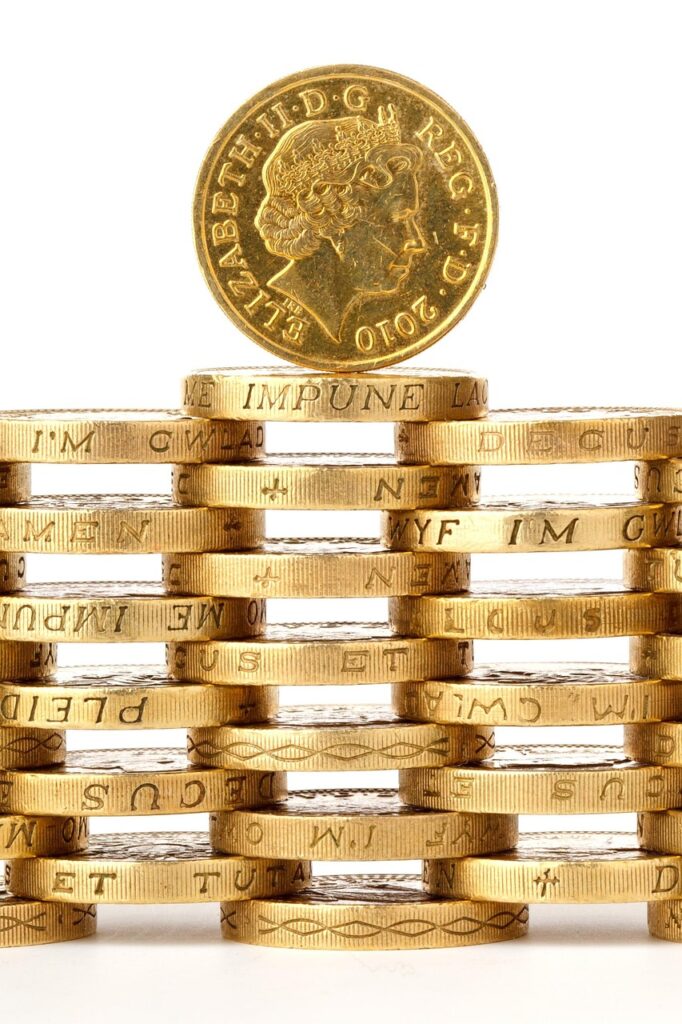
If you’ve ever looked closely at a British coin, you might have noticed a small inscription: FD or Fid Def. But did you know this is actually a title—one originally granted by the Pope to English monarchs as Defenders of the Faith?
The term Fid Def is short for the Latin Fidei Defensor for kings and Fidei Defensatrix for queens, meaning “Defender of the Faith.” The earliest recorded use dates back to 1507, when Pope Julius II granted the title Protector and Defender of the Christian Faith to King James IV of Scotland.
Later, English—and subsequently British—monarchs adopted a simplified version: “Defender of the Faith.” This version was first officially given to King Henry VIII by Pope Leo X in 1521, in recognition of a book attributed to Henry, titled Assertio Septem Sacramentorum (“Defence of the Seven Sacraments”). Though Henry’s name appeared on the cover, much of the work is believed to have been written with the help of Thomas More and Cardinal Wolsey. The book was a defence of the Catholic Church against Martin Luther and the rising tide of Protestant thought.
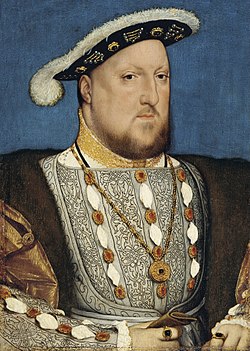
Henry didn’t hold back in his criticism of Luther, calling him a serpens venenatus (venomous serpent), pestis perniciosa (pernicious plague), and inferorum lupus (wolf of Hell), among other insults. The Pope was so pleased with the book—it became a bestseller in Europe and was dedicated to him—that he granted Henry the title “Defender of the Faith.”
Unfortunately, Henry’s relationship with the Papacy soured soon after. When the Pope refused to end his marriage to Catherine of Aragon, Henry broke away from the Roman Church. This eventually led to his excommunication by Pope Paul III in 1538.
Nevertheless, in 1543, the English Parliament passed The Bill for the Kinges Stile, restoring the title “Defender of the Faith” to Henry and his successors. From then on, however, it referred to the Anglican faith. The full style and title became:
“Henry the Eighth, by the Grace of God, King of England, France and Ireland, Defender of the Faith, and of the Church of England and also of Ireland on Earth the Supreme Head.”
All monarchs since—except the Catholic Queen Mary I—have held the title Supreme Governor of the Church of England.
Meanwhile, Pope Paul III attempted to reassign the title by granting it to King James V of Scotland, hoping to steer Scotland away from Henry’s path. But neither this title nor the earlier one granted to James IV was ever formally adopted into the royal style of the Scottish monarchy. The title was temporarily dropped during the Protectorate (1653–1659), but reinstated after the Restoration. The Latin phrase Fidei Defensor began appearing on British coins in abbreviated form (F.D. or Fid Def) starting in 1714 under King George I. In 1849, when an attempt was made to omit it from the design, the resulting coin became known as the infamous “Godless Florin.” Since then, all English coins have included this phrase, a testament to a royal tradition that endures to this day.